
Today we will look at the latest innovations in Czech legislation, which relate to two important areas - renting real estate and the process of obtaining building permits. Changes to the tenancy deposit law are designed to make relationships between landlords and tenants easier and more trusting, while updated rules for obtaining building permits are aimed at speeding up and streamlining procedures for developers. If you are planning to acquire real estate in the Czech Republic, take a few minutes of your time to read this material.
Pledge and interest on it: a unique feature of Czech legislation

Czech real estate legislation is distinguished by its clear and fair regulation of the rights of both the landlord and the tenant. It is aimed at protecting the interests of both parties and introducing mechanisms that make rental housing not only reliable, but also a financially attractive process for tenants. One of the most interesting aspects of Czech real estate law is the possibility of receiving income from collateral. This becomes possible thanks to the rules that oblige the landlord to put the security deposit and return it with accrued interest. Thus, tenants in the Czech Republic can not only return their funds at the end of the lease, but also receive additional income in the form of interest.
Basic provisions regarding collateral and interest calculation:
- mandatory return of interest – the landlord is obliged to return the deposit with interest, the amount of which is determined by the average bank rates in the tenant’s region;
- the possibility of generating income - depending on economic conditions, interest rates can vary from 4% to 16% per annum, which makes rent more profitable for tenants;
- fixing the terms in the contract - if the contract does not specify a specific interest rate, it is automatically set in accordance with the law - this is the average level of rates on bank loans in the region;
- prohibition on deprivation of interest - attempts by the landlord to set a zero interest rate or deprive the tenant of interest are considered illegal.
This mechanism makes Czech rental agreements attractive for tenants, allowing them to make a profit even during the rental process. It is also important to remember that any changes to the terms and conditions regarding the collateral must be spelled out in the contract in advance.
The importance of the lease agreement for protecting the rights of tenants

Czech law emphasizes the importance of formalizing all lease terms in a written agreement. This is a document that must contain clear rules and responsibilities of both parties, including the conditions for the return of the deposit and the accrual of interest.
Key points to be included in lease agreement:
- amount of deposit – the law does not establish a minimum or maximum amount of deposit, but usually it is 2-3 monthly rent payments;
- interest rate on the collateral - it can be agreed upon in advance between the parties. If this is not done, the average bank rate applies;
- tenant rights - the law protects the tenant from arbitrariness on the part of the landlord, including in matters of return of the deposit and the accrual of interest;
- restrictions for the landlord - the landlord has no right to use the security deposit for purposes other than to cover the tenant's debts or compensation for damage to property.
Thus, Czech legislation strives to balance the interests and protect the rights of both parties. Legislative acts provide for detailed regulation of issues related to collateral, which helps to avoid misunderstandings and conflicts between landlords and tenants.
New construction law of the Czech Republic
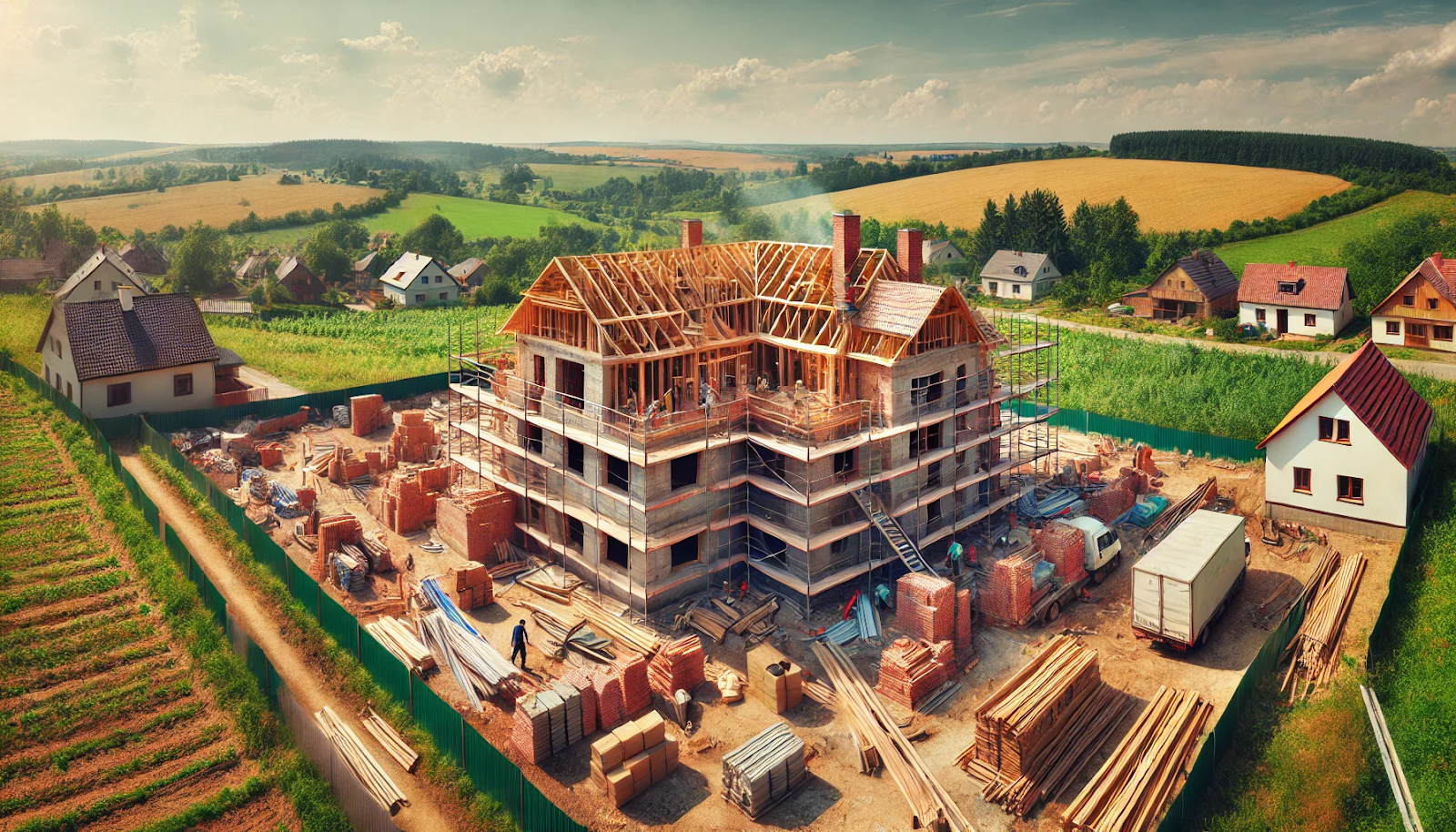
On July 1, 2024, a new law came into force in the Czech Republic. building law, which is designed to significantly simplify and speed up the process of obtaining permits to avoid the emergence of squatters. Previously, this process could take years, which created a lot of inconvenience for developers and hampered the development of new projects. The law is aimed at reducing bureaucracy, introducing digital technologies and creating more transparent conditions for all participants in the construction process.
Major changes in construction legislation:
- Digitalization of the permitting process.
- Simplification of the procedure for obtaining permits and interaction with government authorities.
Let's take a closer look at the innovations. One of the main “new products” is the complete transition of the process of obtaining construction permits to a digital format. Now developers will be able to submit all necessary documents through special online portals, which will significantly reduce time and financial costs. Key changes:
- online submission of documents - now developers do not have to visit various institutions in person;
- speed of the process - application processing time is reduced to 30-60 days for simple projects, such as private houses;
- the possibility of using paper documents – for more conservative developers, it remains possible to submit some documents in paper form.
Another important change is that construction projects will now be treated as a single process. This means that the developer will not need to separately obtain permission for the location of the facility and permission for its construction. All these steps are combined into one procedure, which reduces time and paperwork. Main innovations:
- unified review procedure - permission for the location and construction of the facility will be issued within one process;
- strict deadlines - the authorities responsible for issuing permits are required to make decisions within a specified time frame - for private facilities up to 30 days, for complex infrastructure projects up to 120 days;
- minimizing the participation of the developer - in the absence of certain conclusions, the construction authority will independently request them from the relevant authorities, without involving the developer.
The new Czech construction law has become an important step to reduce bureaucracy and speed up construction processes. The introduction of digital tools, simplification of procedures and reduction of paperwork deadlines will create favorable conditions for the development of the construction industry in the country. These changes are especially relevant against the backdrop of growing demand for housing and infrastructure facilities. It is important to note that the successful implementation of these innovations will depend on the efficiency of the new systems and the readiness of all market participants to transition to digital technologies.