
Kyiv, the capital of Ukraine, attracts investors from all over the country and the world. The metropolis is open to the construction of ambitious, innovative residential complexes, business centers and other infrastructure. Subsequently, the panorama of the city is decorated with interesting architectural objects, but sad situations often occur. Investors violate the terms of contracts, initially approved design plans are ignored, and documents are falsified. Thus, construction is frozen and ghost buildings appear in the capital. Contact experienced experts and they will find you reliable real estate in Kyiv.
“Dead Souls”
“Dnieper Towers”
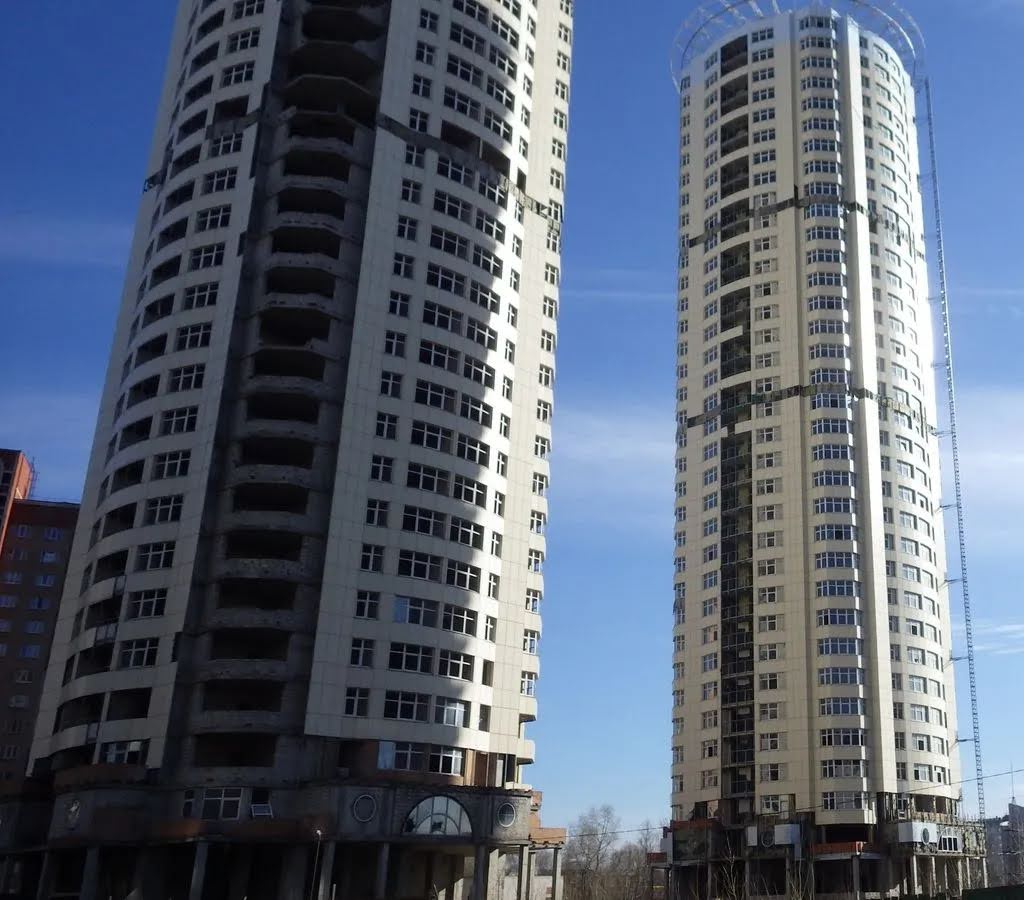
Opens the list of controversial buildings, residential complex “Dnieper Towers”. A pompous project for 1999, it envisaged the construction of six 34-story skyscrapers in Troyeshchyna. Construction began by order of the Main Directorate of Internal Troops of the Ministry of Internal Affairs and was successful until 2003. Suddenly, in the fall of 2005, construction was completely frozen, the residential part was only 60% ready, the entire area - 45%. The main problem of the project was the suspension of funding from the state budget - until that time, the construction of housing for military personnel was financed by income taxes.
The company “UkrAsiaBud” got involved in the situation. The company promised to complete the construction of houses. But, ironically, the company overestimated its capabilities and stopped investing in the long-suffering complex. Years later, many other investors tried to complete the Dnieper Towers, but things did not go beyond documentation and plans. The buildings themselves, reacting to all the irresponsibility, became unusable. In 2010, two of the six skyscrapers leaned, for which they were nicknamed “Pisan” in the capital. At the moment, the territory of the complex is closed to ordinary citizens and is guarded by internal troops of the Ministry of Internal Affairs.
“Prestige Hemline”
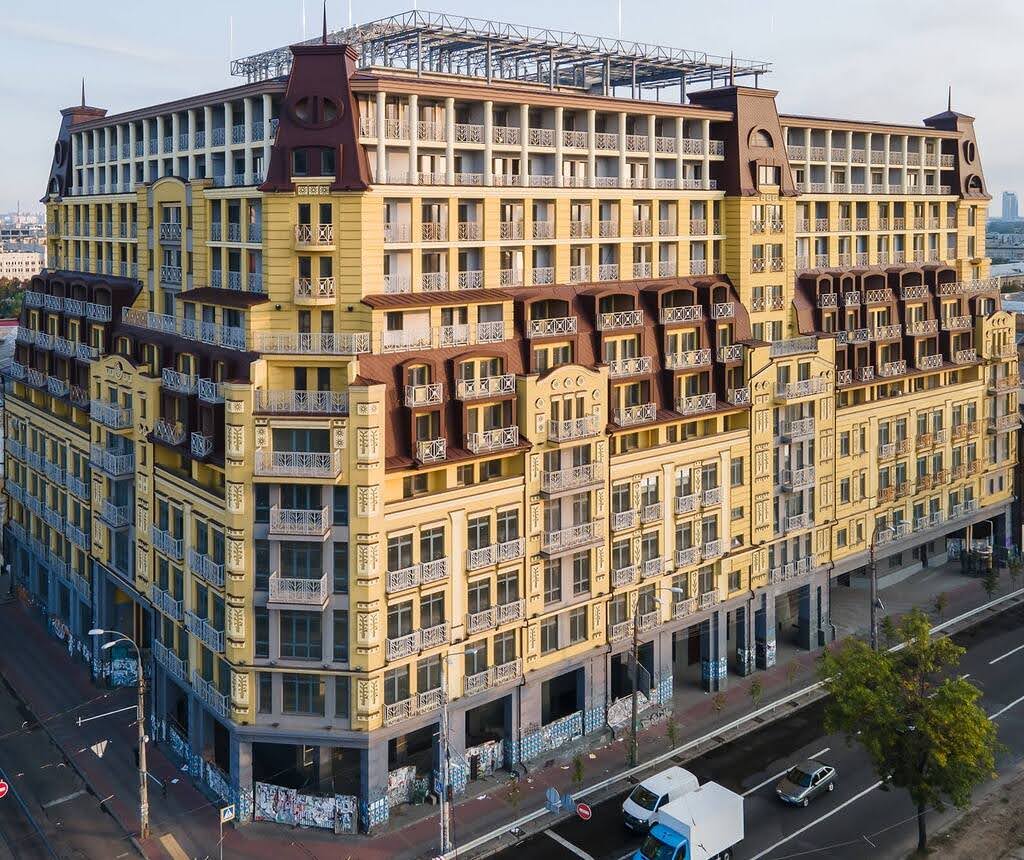
The scandalous house grew up in 2012, on Nizhny Val Street, 27-29. According to the classic history for Kyiv, initially it was allowed to build five floors. At the request of the developer, Pateli Leasing, they were granted permission to increase the height by eight floors - as a result, the developer, at his own request, added four more. Since 2014, the court ordered the developer to demolish the illegal levels, and in 2020 the case was closed. After this, the State Architectural and Construction Inspectorate must give permission to put the residential complex into operation. But a lingering uncertainty hangs over Podol Prestige, which has caused the sale of apartments in the complex to stop.
So why didn't the building receive a positive reaction from the public? Experienced architects, experts and ordinary residents of the capital note the pseudo-historical style of architecture, the number of storeys unacceptable for the area and the general bulkiness of the house.
“Sky Towers”
The skyscraper could become the tallest building in Ukraine and Eastern Europe - 41 floors, 214 meters. In 2007, on Pobedy Avenue, the developer “Kyiv Donbas Development Group” started the construction of a bold project. In 2010, this residential complex was included in the list of buildings that must be ready for Euro 2012. The result of loud promises was the stoppage of construction in 2015 and the developer’s huge debt to Ukreximbank.
Confusion with ownership of the facility, a rapid loss of profitability, and the need for incredible amounts of additional investment led to Sky Towers being added to the long list of long-term construction projects in the capital.
“Fresco Sofia”
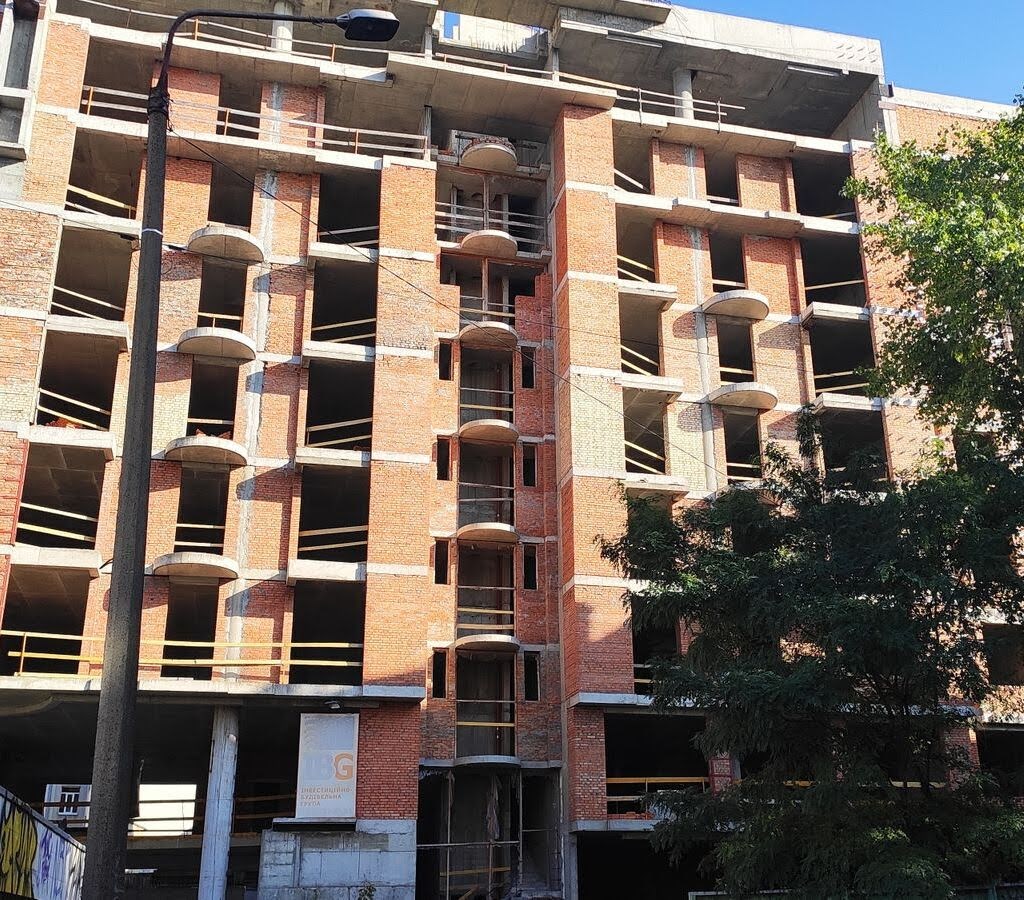
In 2008, the capital's public was excited by an event on Oles Gonchar Street, in close proximity to the Cathedral of St. Sophia of Kiev. The alley is under UNESCO protection and in this case the maximum permissible height of new buildings here should not be higher than the adjacent historical buildings - 12-25 m. The developer, in turn, wanted to make the residential complex one and a half times higher.
Despite protests from activists, construction of Fresco Sofia continued until 2016. In 2020, the mayor of Kyiv Vitaliy Klitschko said that the issue of controversial construction in the historical area of the city “has been put to rest.” In the spring of the same year, public figures announced the start of work to dismantle the prohibited floors. Whether the residential complex will be completed at all and in what year this will happen remains an open question.
Development of the Dnieper embankment
In 2006, the architect Maria Susskaya from the famous bureau of Sergei Babushkin came up with Napoleonic plans for the construction of the Left Bank Public Center, as well as a radical change in the coastal part of the Dnieper.
For six months, the project was at the stage of heated discussions; many city planners did not share the bold idea of building objects along the river - any skyscrapers would block the panorama of the right bank of the capital. Engineers pointed out the danger of the location - the skyscrapers would stand right next to the river. Thus, it was decided to build up the area not with ultra-modern high-rise buildings, but with recreation areas, beaches, restaurants and parks.
Wind of change
Some projects remain only a mention on documents, others remind with their skeletons of all sorts of risks and miscalculations of developers. At this point in time, many development companies take into account the mistakes of their predecessors, building their facilities more aesthetically, and most importantly responsibly.