
Energy efficiency is not only a popular trend of modern times, but also a real headache for property owners. Many investors choose a property in one of the European countries based solely on a good yield (as in Amsterdam) a slight percentage on the mortgage (definitely not like in Warsaw) and a beautiful appearance (like in any corner of the EU). But few of them think about energy efficiency. Of course, minimizing consumption and costs would be good, but this is only the part of the issue that is on the surface. What are the other risks of neglecting energy efficiency for a modern investor? Let's analyze in theory and in practice.
Classification of objects by energy efficiency
Simple division into green, yellow, and red is familiar to you thanks to ordinary light bulbs. In addition to color classification, objects are also divided by letters - from A to G, where A indicates exemplary energy efficiency, D indicates a standard level equivalent to yellow, and G is equivalent to red, accordingly. Homes, like light bulbs, undergo classification and receive an Energy Performance Certificate EPC stands for Electronic Product Code). But in their case, a more simple and understandable division by levels occurs. Currently, some additional adjustments are being made that will not leave homeowners a chance to get confused.
- Category A will be represented by buildings with zero energy consumption.
- About 15% of the houses in the country will belong to category G, which is characterized by the worst energy efficiency.
- The remaining buildings will be distributed among the other categories.
We mentioned zero-energy buildings and suggest to stop in more detail on this point because it may seem unclear to many. Zero energy consumption is achieved by designing homes in a way that minimizes operating costs. In addition, alternative energy sources such as solar panels, wind turbines, use of biofuels, and more are incorporated into the projects. Buildings equipped with such technologies are divided into:
- homes with almost zero energy consumption;
- homes with completely zero consumption;
- Homes that generate additional energy and can sell it.
The highest concentration of such technologies is in Canada, Denmark, and Finland. In Ukraine, solar panels are also increasingly being used in large enterprises and in the construction of private houses.
The benefits of energy efficiency in practice
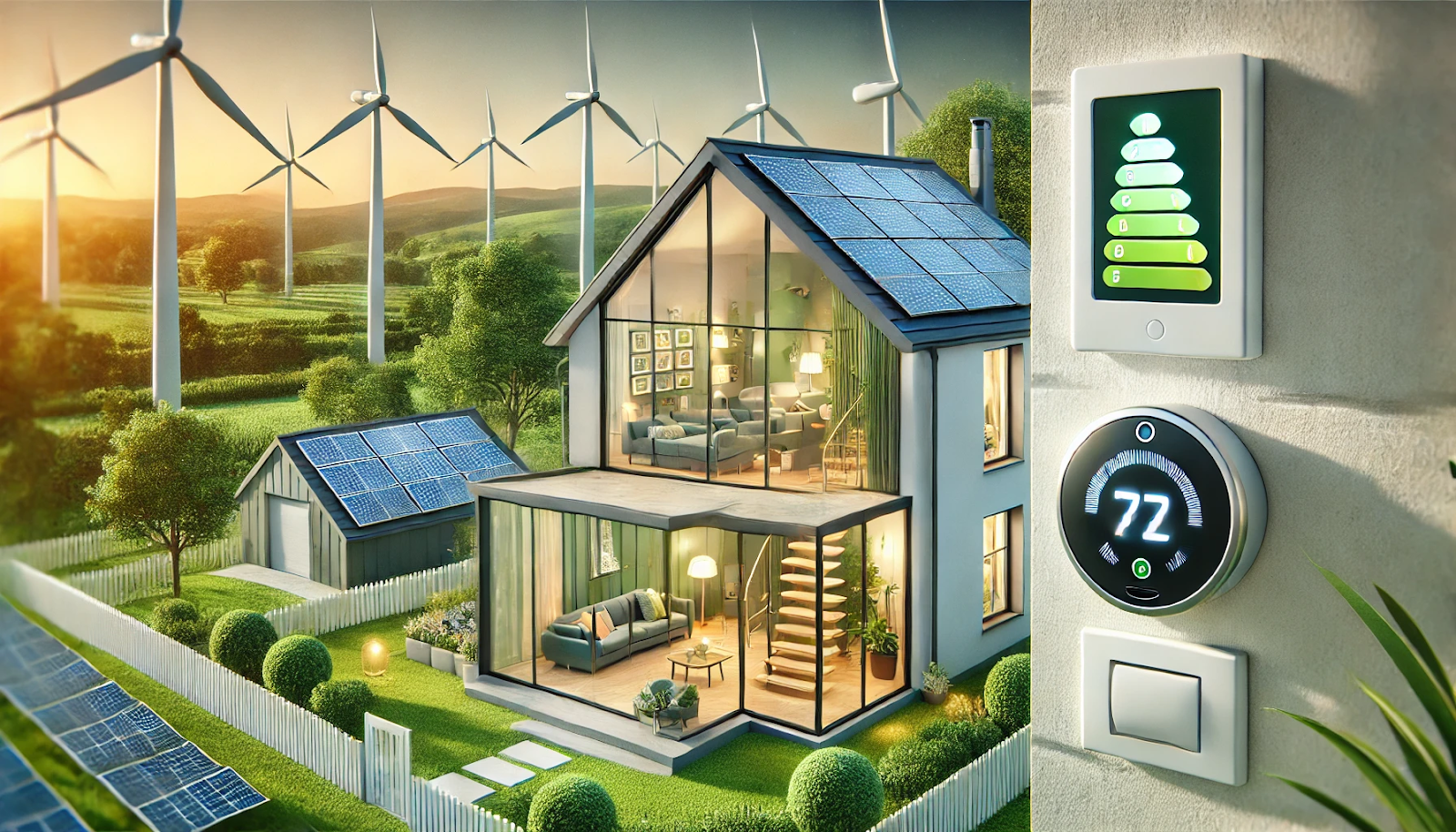
Buying and installing energy-efficient equipment is significantly more expensive than regular equipment, but during operation, every dollar spent pays off handsomely. Don't believe it? Then the following points are especially for you:
- Our winters are not as frosty as before, but also not warm enough to completely turn off the heating. Experts claim that additional insulation of windows, roof, walls, and floor will prevent heat from escaping your home quickly and reduce heating costs by 10-30%, of course, if you have installed a thermostat to control temperature and heat supply.
- Water heating also makes a significant contribution to the total amount on the bill, so why not save on it as well? According to Energy Star calculations, an energy-efficient water heater will cost $700 more, but when used, it will save about $3,500 over the entire term of its service.
- A plethora of electrical appliances are essential in everyday life, so it is important to choose more energy-efficient ones, starting from light bulbs and ending with washing machines.
- Few people think about installing the system "smart home", as a way to save money, but it will help perfectly with this task. You will be able to remotely manage basic processes and minimize resource consumption. So, for example, instead of heating your apartment from morning to evening, you can schedule the heating to turn on automatically a few hours before returning from work, which is enough to warm up the rooms to a pleasant temperature.
The European Commission has released its research, which indicates that a G-class house consumes 10 times more energy than an A-class building. If you manage to raise the class of your housing to at least E, you can already save about two-thirds of energy.
What awaits an investor who does not care about energy efficiency

In many countries, restrictions have already been introduced for homeowners planning to rent out their property. Strict measures are intended to compel them to make quality improvements to their properties. Let's consider the example of France, so you can better understand the restrictions in question.
- Starting from August 2022, owners are not allowed to increase the rent in properties of category F and G in both existing and new contracts. Price increases are only permitted when upgrading the category, which means after renovation has been carried out.
- Starting from January 2023, owners of residential properties classified as G+ with energy consumption exceeding 450 kWh/m² per year are completely deprived of the right to rent out their real estate.
- From January 1, 2025, it will not be possible to rent out G-class housing.
- From January 1, 2028, it will not be possible to rent out Class F housing anymore.
- From January 1, 2025, it will not be possible to rent out E-class housing.
Similar requirements and measures are common in all European countries, so by ignoring them, you risk being left without income, even if you have chosen an apartment with the best views in the city for investment. The Directive on the energy performance of buildings (EPBD) was approved in the EU back in 2002, and has been amended several times since. States are doing everything possible to draw attention to energy efficiency for businesses and individuals and to implement it in their real estate. Thus, it is not uncommon to find preferential loans for building reconstruction or compensation for repairs already made. Such programs are widely spread in Italy, Germany, and many other countries. The higher the energy efficiency of a property, the more attractive it becomes to potential buyers or tenants, so investments in upgrading the property class increase its profitability. Currently, there are still about 75% of buildings in the EU market that need improvement. Homeowners are actively working on this, so each year there are 1% fewer of them.