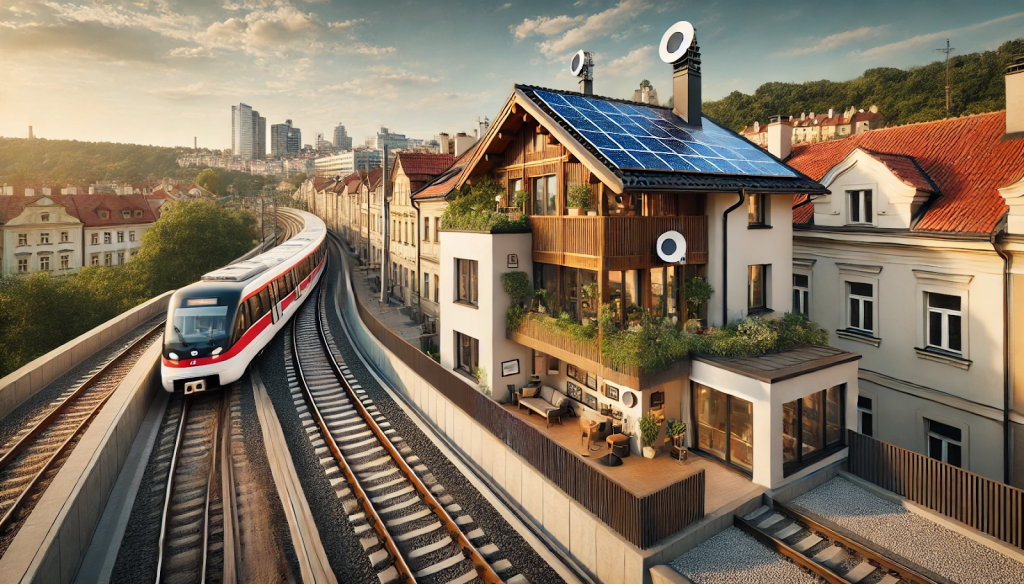
Buying property in Prague is not only a matter of price, but also a strategic choice that affects comfort and savings in the long term. In recent years, two key factors have become one of the main criteria when choosing housing: proximity to metro stations and the level of energy efficiency of buildings. The metro provides easy access to central areas and speeds up daily commutes, while energy-efficient housing helps significantly reduce utility costs. Let's look at how these two aspects affect the cost of housing in different areas of Prague and why they have become decisive when purchasing real estate.
The cost of real estate in Prague near the metro

The cost of housing near the metro in Prague may vary depending on the location of the station and proximity to the historical center. In recent years, property prices in the Czech capital have increased significantly, especially in areas with convenient access to public transport. Analytics for the first quarter of 2024 show that apartments within a radius of 500 meters from metro stations are in particular demand. Here are some key points and factors that will help you better understand the situation on the real estate market in Prague and pricing housing near the metro:
- Transport accessibility – proximity to metro stations has always been an important criterion when choosing housing in Prague. A well-developed public transport network makes areas near the metro more attractive to buyers.
- Historical center – the highest housing prices are traditionally recorded in the historical center of the city, where stations such as the Main Station and Staromestskaya are located.
- New Subway Lines – Planned new subway lines also have an impact on property values. Even in remote areas, prices are expected to rise as new stations are completed.
Current housing prices near key metro stations in Prague:
- “Glavni Nadrazi” (“Main Station”) – the average cost of an apartment within a radius of 500 meters is 240,450 CZK/m². It is the most expensive metro station in Prague as of 2024;
- “Staromestska” – here the price per square meter reaches 232,384 CZK/m². Its location in the heart of the historical center makes this station one of the most prestigious;
- “Malostranska” - the cost of apartments in this area is 213,782 CZK/m², which is also due to the proximity to historical attractions;
- “Roztyly”, “Gae”, “Depo Gostivarzh” - in these areas housing prices are lower compared to the central stations. The average price here is less than CZK 100,000/m², making these areas accessible to buyers on a more modest budget;
- “Pisnice” (the final station of the planned metro line D) – the lowest real estate price was recorded here. The average price is CZK 76,646/m². This station is still in the planning stage, but is already attracting interest due to its low prices.
Construction of new lines, such as the D line, is being actively promoted and this is having an impact on the property market in outlying areas. As new stations are completed, prices may rise significantly.
The cost of housing near metro stations in Prague varies widely depending on the area. The highest prices are observed in the city center and in close proximity to the main historical attractions. At the same time, in remote areas you can find housing at significantly lower prices, especially in those parts of the city where the opening of new stations is just planned. The situation on the real estate market shows that convenient transport accessibility remains one of the key factors when choosing an apartment, and due to the development of the metro, prices continue to rise even in remote areas.
Where to look for energy efficient properties in Prague
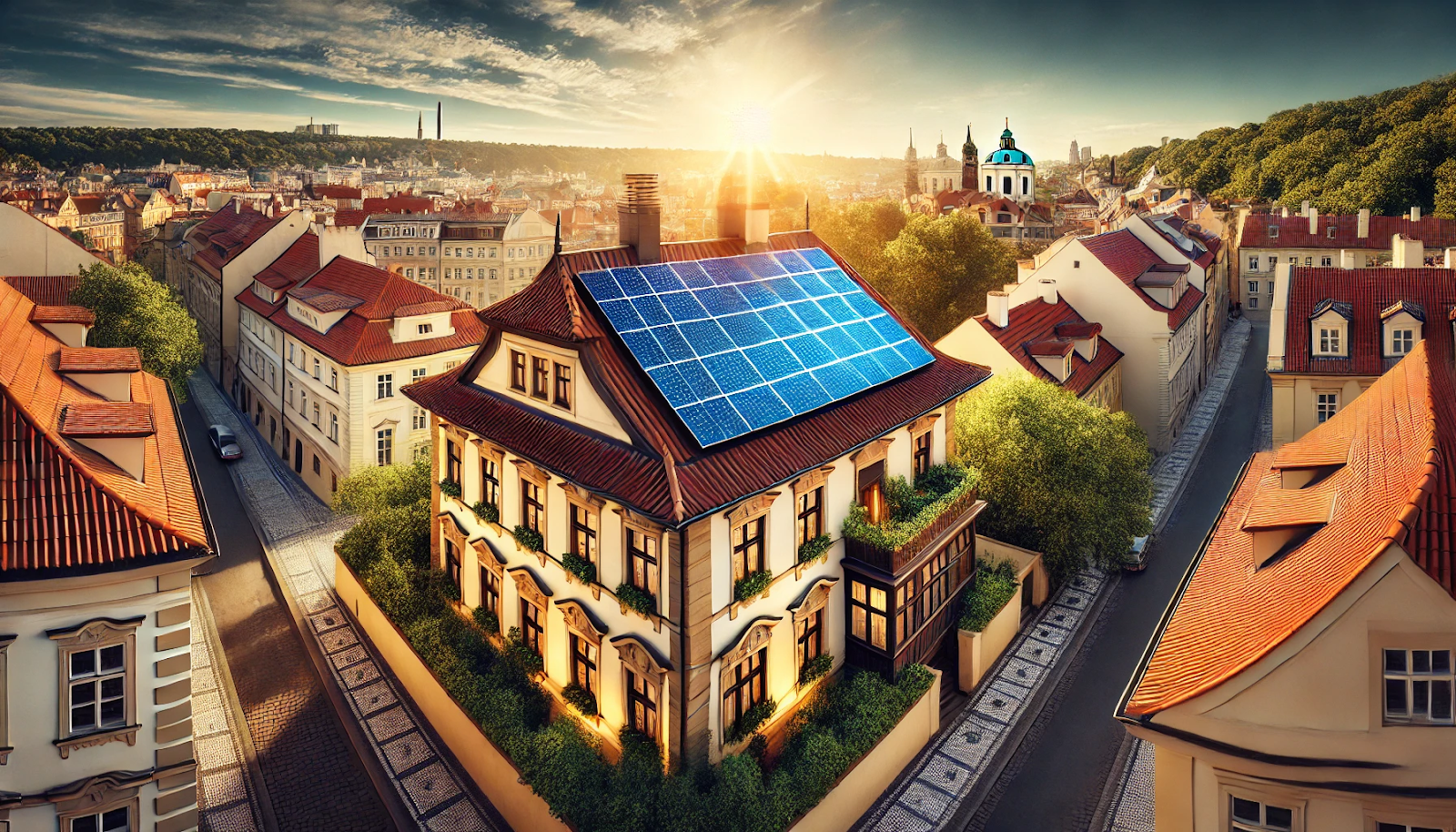
The distribution of energy efficiency classes among Prague districts is an important aspect that also affects the cost of living and comfort level. Prague, like other European capitals, is actively working to increase energy efficiency of their buildings, but differences between areas are still significant.
Energy efficiency classes by Prague district:
- Historical center (Praha 1, Praha 2, Praha 3). Buildings of classes C, D, E, F predominate. This is due to the unique architecture of ancient buildings, which cannot always be modernized without compromising their historical value. In these areas, it is difficult to carry out large-scale insulation work, which is why thermal insulation leaves much to be desired, and heating systems are often outdated. High utility costs are a characteristic feature of these areas, as more energy is required to maintain a comfortable temperature.
- Old residential areas (Praha 3, Praha 7). Buildings of classes D, E and F are common here, which are characterized by high levels of heat loss and high heating costs. Old residential buildings, many of which were built at the beginning of the 20th century, cannot always be modernized without major repairs. Heating costs are usually high here, especially in winter.
- Industrial zones and panel houses (Praha 6, Praha 8). These areas are dominated by class C, D and E buildings built during the Soviet period. Many panel houses and industrial facilities have been partially modernized, but their energy efficiency still leaves much to be desired. Utilities here are often higher than in new residential complexes, since heating systems and thermal insulation do not always meet modern standards.
- New residential areas (Praha 4, Praha 5, Praha 9, Praha 10). The predominant houses here are class A, B and C. These are modern buildings built to the latest energy efficiency standards. Modern technologies such as heat recovery systems, improved insulation and smart heating controls can significantly reduce energy and heating costs. These areas are popular among young families and people who value modern solutions and lower utility bills.
- Elite areas (Praha 6, Praha 7). These areas are known for their Class A and B buildings, indicating high levels of energy efficiency. Luxury houses are built using the latest energy saving technologies. Here you can often find buildings with solar panels, smart home systems, heat recovery and other modern engineering solutions that can significantly reduce utility costs. Such areas are preferred by people with high incomes who are ready to invest in comfort and innovative solutions for their housing.
The energy efficiency of buildings in Prague varies significantly depending on the area. While new and elite areas offer high-class energy efficiency housing with minimal utility costs, historical and old ones require high costs to maintain comfort due to poor thermal insulation and outdated engineering systems.