
Get a house for free? Only a fool would refuse such an offer. But doesn't excessive generosity seem suspicious to you? Since childhood, we all know the proverb "free cheese is only found in a mousetrap." Will it not disappoint us this time? Let's find out together!
Akii: types and reasons for their appearance
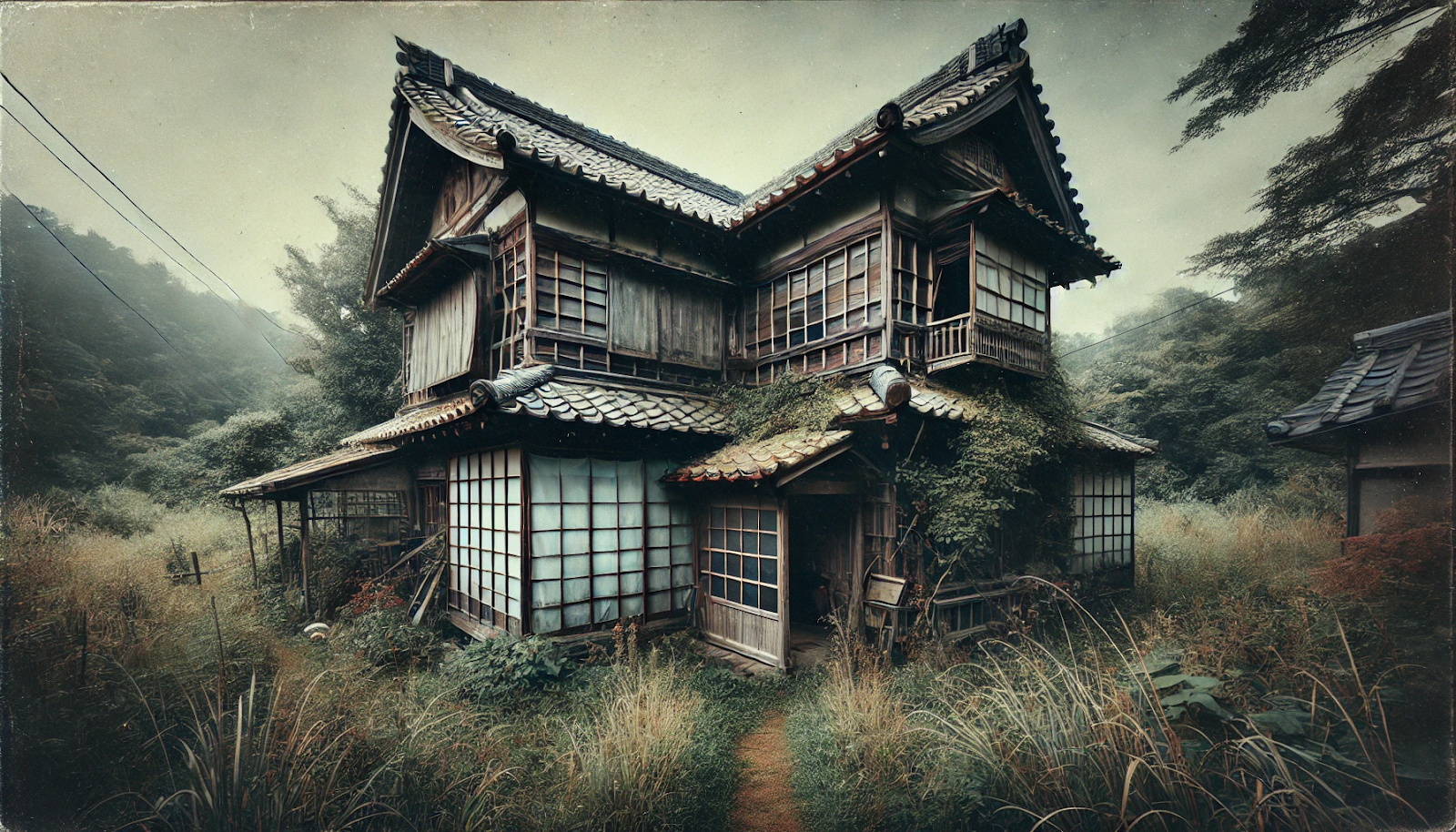
From one extreme to another - in Japan, they were so afraid housing shortage, that the issue has shifted from overpopulation to declining birth rates. This negative trend is already making itself known. The decrease in the number of infants directly affects the population size in the future. Even now, as the birth rate problem is just beginning, there has been a significant increase in the number of vacant houses. Most real estate remains ownerless, and therefore neglected. The houses are not just empty - they are abandoned and neglected. The presence of even a few such buildings on the street has a negative impact on its appearance and reputation.
Abandoned houses, devoid of the care of the owner, in Japan even received a separate name - "akiya". Initially, they were only common in rural areas, but over time they began to appear in big cities and even in Tokyo. This is quite surprising, considering that back in 2006, Japan was one of the most densely populated countries with 35 million people living there simultaneously. What are the reasons for the appearance of "akii"?
- We have already mentioned the low birth rate, but it is not the only issue. The population of the country continues to age, and unlike birth rates, the mortality rate remains unchanged. Because of this, real estate sooner or later remains without an owner because there simply are no candidates to fulfill this role.
- Few people are surprised that young people do not want to stay in their native village or provincial town. Everyone strives for megacities because they offer more opportunities for self-realization and development. The lack of developed infrastructure also significantly influences the choice of location, which is why old houses on the same streets and in the same settlements remain empty.
- In search of a better life, skilled workers move not only to other regions, but also to other countries. There they start a new life from scratch and prefer not to think about their old home, which becomes a burden to them.
- Japan's tax policy also contributes. The cost of renovation work, as well as demolition of a building, is too high. Choosing between buying a new, even smaller, home and expensive renovation of an old one, many opt for the first option, as it is more financially accessible.
The state is trying to change the situation, but so far it is not going well. The only effective solution is to give the house for free on the condition that the new owner will take care of it and bring it to a divine state.
Buying real estate in Japan: pros and cons
At first glance, buying property in Akoya seems like a profitable business. Local realtors convince foreigners that the almost free house they acquired can turn into an excellent source of income. After renovation, it can be rented out or turned into a hotel or restaurant. The prospects are really good, but let's focus on the current state of the real estate market in Japan to understand if it's worth getting into this race for a elusive dream. There are several nuances that will quickly temper your enthusiasm.
- At the moment, there are 9 million abandoned houses in the country.
- Only 300,000 acres are currently listed for sale.
- Bureaucratic formalities insert sticks in the wheels and make the ordinary process of purchasing quite laborious.
- Most of the AKIY is located in unprofitable areas that cannot boast of prospects.
Foreign investments could solve the situation and breathe life into the lonely houses, but there is more benefit for Japan than for buyers, so the street landscapes remain decorated with leaning walls and broken windows. Owners of such properties are also not to be envied - for years they cannot get rid of their burden and only watch it wither.
The problem of abandoned houses in Europe
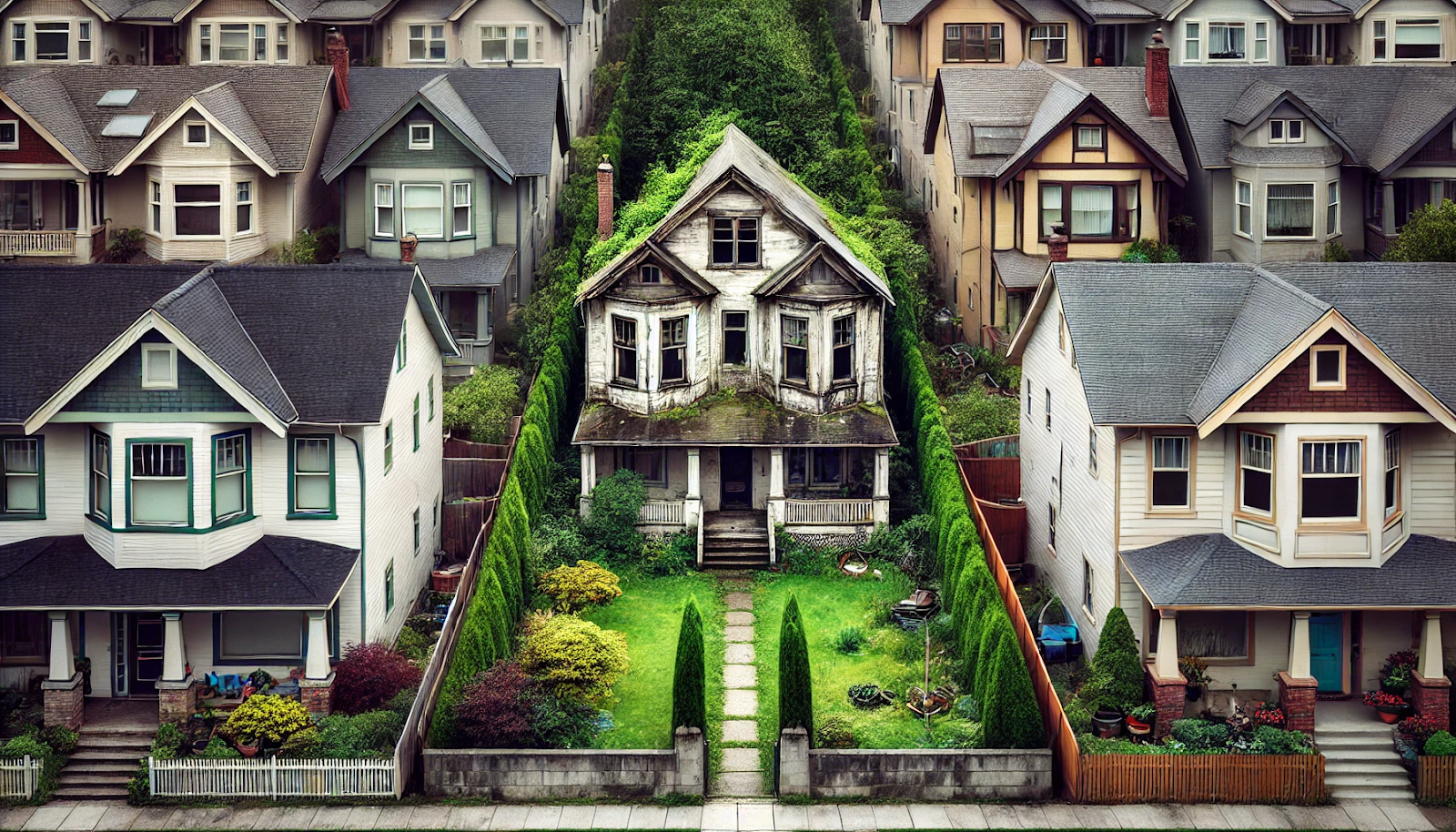
Not only Japan has faced the problem of abandoned houses. In Europe, there are also plenty of them, although not on the same scale. In particular, European counterparts can be seen in:
- Germany. Ghost towns formed as a result of the closure of coal mines. Residents were resettled to other settlements, and the houses remained abandoned. The state did not allocate funds for their demolition and is not in a hurry to do so. In recent years, the abandoned village has been populated again - refugees have become the new residents, who simply have nowhere else to go.
- Spain and Italy. The news that properties in these countries are being offered for just 1€ quickly spread around the world. However, investor interest faded just as quickly. All the houses are located in semi-forgotten villages and require reconstruction. The government agrees to sell them only on the condition that the new owner renovates the property within a year.
- Ukraine. It's not just about Chernobyl. Dolinskoye and Tsukrovarov in the Kirovograd region and Orbita in Cherkasy have also been abandoned for many years. Multi-storey buildings were once built for workers of large industrial facilities. Now there is no trace of them, just like the residents. The houses have been waiting for reconstruction for years, which has not yet happened.
The minimum price carries the maximum responsibility. Bureaucracy during registration and high costs for repairs deter even the most daring investors, so the real estate of different countries will still be waiting for their owners for a long time.